

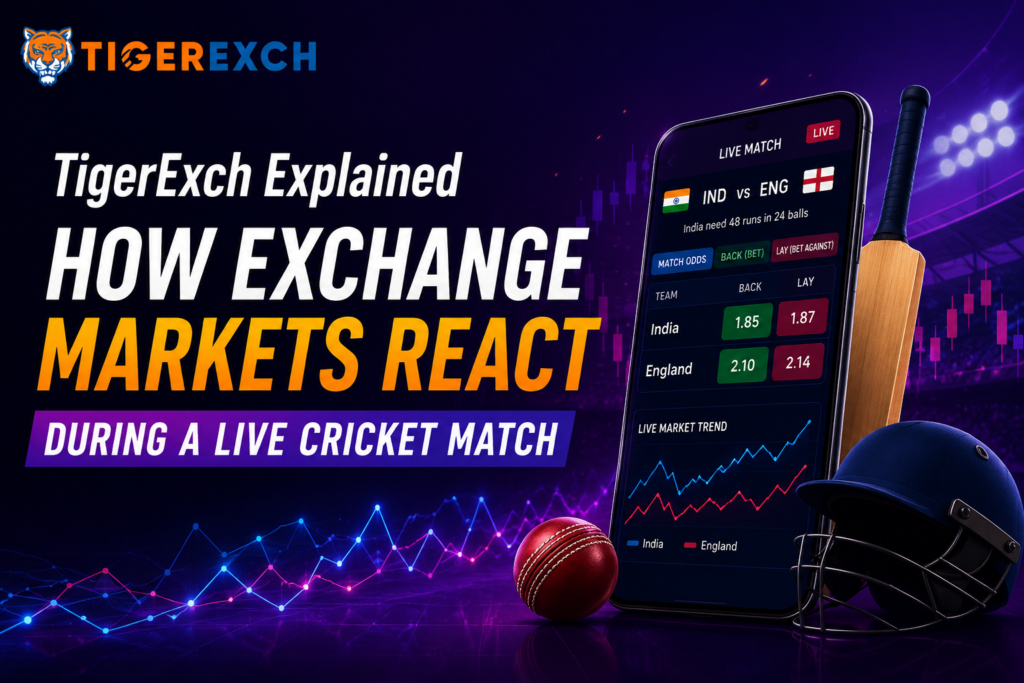
Cricket is full of momentum shifts. A single wicket, an explosive over, or a dropped catch can change expectations within seconds. On a cricket exchange platform, those moments are often reflected in changing market prices.
This article explains how TigerExch is commonly associated with cricket exchange services and explores how live exchange markets respond during a cricket match. Rather than offering betting advice, the focus is on helping readers understand the mechanics of exchange markets, the factors that influence prices, and why responsible participation matters.
What Is a Cricket Exchange?
A cricket exchange is a marketplace where participants trade opinions on match outcomes rather than placing wagers directly against a bookmaker. Prices are created by market activity, meaning they change as new information becomes available during the game.
Unlike fixed-odds models, exchange prices often respond almost instantly to events on the field.
Key Characteristics
- Prices change throughout the match.
- Market sentiment influences available odds.
- Match events directly affect pricing.
- Liquidity can vary depending on the competition and market.
How Live Exchange Markets React
Every delivery has the potential to influence expectations. Exchange markets process new information rapidly because participants continually reassess the likely outcome.
Some of the most common triggers include:
| Match Event | Typical Market Reaction |
| Early wicket | Batting team’s implied chances may decrease. |
| Fast scoring over | Batting team’s position often improves. |
| Bowling partnership | Market confidence may shift toward the bowling side. |
| Rain interruption | Prices may adjust to revised playing conditions. |
| Injury or retirement | Uncertainty can increase market volatility. |
These reactions depend on context. A wicket in the first over carries different significance than a wicket in the final over.
Why Odds Change So Quickly
Exchange prices reflect collective expectations rather than fixed predictions.
Several factors contribute to rapid movement:
- Current score
- Required run rate
- Remaining wickets
- Overs left
- Batting depth
- Pitch conditions
- Weather interruptions
- Fielding performance
As these variables change, so does the market’s assessment of each team’s chances.
Tiger exchange cricket and Live Market Movement
The phrase tiger exchange cricket is often used by people searching for information about cricket exchange platforms and live market behaviour.
During a live match, market movement is typically influenced by:
Batting Momentum
Consecutive boundaries can improve perceived winning chances.
Bowling Pressure
Dot balls and wickets may reduce confidence in the batting side.
Match Situation
The same score can have different meanings depending on overs remaining and wickets in hand.
Player Form
A well-set batter or an experienced bowler can influence market expectations even before the next ball is delivered.
Example: Momentum Shift
Imagine a team chasing 180 runs.
After 15 overs:
- Score: 125/2
- Required run rate: 11 per over
If two wickets fall in the next over, the market may reassess the chase as more difficult.
On the other hand, if the batting side scores 20 runs without losing a wicket, confidence may increase.
The exchange reacts to changing probabilities rather than guaranteeing any outcome.
Factors Beyond the Scoreboard
Experienced followers often look beyond runs and wickets.
Other considerations include:
- Boundary percentage
- Strike rotation
- Bowling options remaining
- Powerplay performance
- Death-over specialists
- Pitch wear
- Dew conditions in day-night matches
These details help explain why prices sometimes move even when the scoreboard changes only slightly.
Common Mistakes Beginners Make
Understanding exchange markets takes time, especially for beginners exploring Tiger Exchange for the first time. New users often make assumptions based only on the current score instead of looking at the complete match situation.
Common mistakes include:
- Ignoring the required run rate.
- Overreacting to a single boundary.
- Forgetting the impact of remaining wickets.
- Misjudging changing pitch conditions.
- Assuming market prices predict the future with certainty.
When using Tiger Exchange, it is important to understand that exchange prices represent the current market opinion based on available information. They are not guaranteed predictions of the final result. Taking time to study match conditions, team performance, and market movement can help beginners develop a better understanding of cricket exchange markets.
Reading Live Markets More Effectively
Instead of focusing on one statistic, consider the broader match context.
Useful questions include:
- How many overs remain?
- Which batters are at the crease?
- Who are the remaining bowlers?
- Is the pitch helping bowlers or batters?
- How has momentum changed during the last few overs?
Looking at the complete picture provides a better understanding of why prices move.
Responsible Participation
The Cricket exchange platforms involve financial risk. No market movement guarantees a particular result, and unexpected events are part of sport.
If you choose to participate:
- Set personal spending limits.
- Avoid chasing losses.
- Base decisions on informed understanding rather than emotion.
- Take breaks when needed.
- Treat participation as entertainment, not a source of income.
Responsible gaming helps reduce the risk of harmful behaviour.
Key Takeaways
- Cricket exchange prices respond to live match events.
- Momentum, wickets, run rate, and playing conditions all influence market movement.
- Exchange prices reflect collective market opinion rather than certainty.
- Understanding context is more valuable than watching the score alone.
- Responsible participation should always come first.
Conclusion
Live cricket exchange markets are dynamic because every over can change the balance of a match. By understanding how factors such as wickets, scoring rate, player performance, and match conditions influence pricing, readers can better interpret market movements without relying on assumptions.
Learning how exchange markets operate is more valuable than simply watching odds fluctuate. Whether you’re researching TigerExch or looking to understand tiger exchange cricket concepts, a clear understanding of market mechanics, combined with responsible decision-making, provides a more informed perspective on how live cricket exchange markets function.
Frequently Asked Questions
What is TigerExch?
TigerExch is a brand associated with cricket exchange services. It is commonly referenced by users seeking information about exchange markets and related features.
How do cricket exchange markets work?
They allow participants to trade positions with one another, with prices changing according to market activity and live match developments.
Why do exchange prices change during a match?
Prices react to events such as wickets, scoring rate, weather, player performance, and overall match momentum.
Are exchange odds guaranteed to predict the result?
No. Exchange prices reflect current market expectations and can change at any moment as new information becomes available.
What affects live cricket market movement the most?
Key factors include wickets, required run rate, overs remaining, batting partnerships, bowling performance, and pitch conditions.
Is following the scoreboard enough to understand the market?
Not always. Market participants also consider context such as player form, field conditions, and tactical decisions.
Why is responsible gaming important?
Because cricket exchange activities involve financial risk. Setting limits and avoiding impulsive decisions helps reduce the potential for harm.